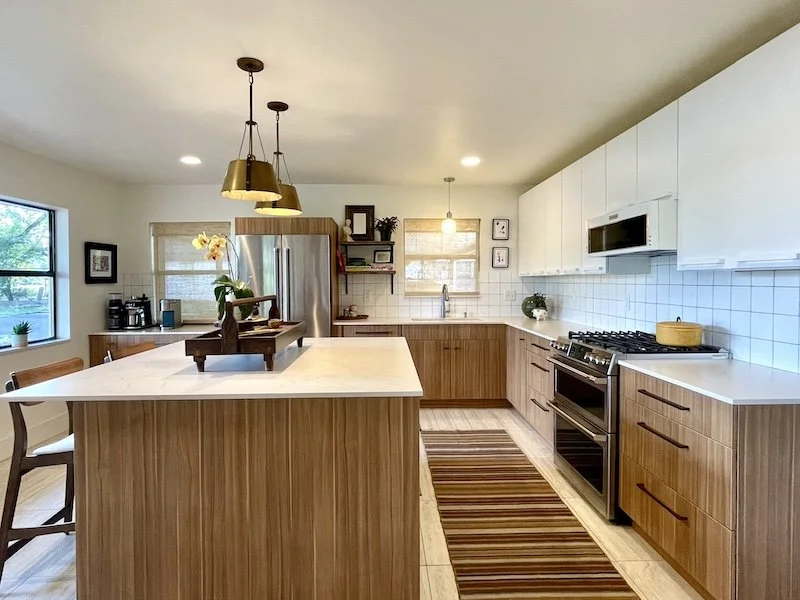
Urban Kitchens designed this Mid-Century Modern kitchen in Oklahoma City.
There's a reason mid-century modern homes continue to capture our imagination. Maybe it's the clean lines, the big windows, or the way a well-designed home seems to blur the boundary between indoors and out. Or maybe it's the colors, the geometric patterns, and the occasional audacious design choice that makes a room feel like it has a personality of its own.
Whatever the appeal, mid-century modern homes have something that can be hard to find in newer construction: character.
But living in a house built 60 or 70 years ago can present a few challenges. Kitchens may be short on counter space, bathrooms may be showing their age, and the original insulation wasn't necessarily designed with Oklahoma summers in mind. Remodeling offers an opportunity to bring a home into the present without sanding away everything that made it interesting in the first place.
The trick is knowing what to change—and what to leave alone.
What Makes a Home Mid-Century Modern?
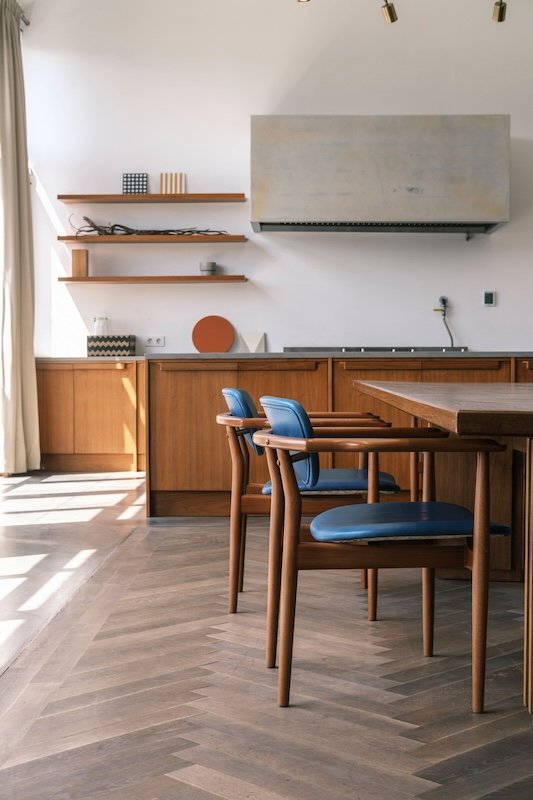
Clean lines and a minimalist
aesthetic are the hallmark elements
of Mid-Century Modern Design
Mid-century modern design, which rose to prominence from roughly the 1940s through the 1960s, embraced simplicity, functionality, and a closer relationship with nature. But simple doesn't mean boring.
Think clean architectural lines, low rooflines, large windows, natural wood, brick, stone, and open living spaces. Then add the unmistakable design vocabulary of the era: bold geometric shapes, repeating patterns, sculptural lighting, and colors that weren't afraid to make a statement.
Mustard yellow, avocado green, burnt orange, turquoise, and warm browns all have a place in the mid-century palette. Black and white geometric patterns can add contrast, while starbursts, atomic-inspired motifs, and abstract shapes bring a little playful energy into the mix.
Of course, not every mid-century home features all these elements. Some are understated and earthy; others lean into color and pattern. The point isn't to turn your house into a set from a 1960s television show. It's to understand what gives the architecture its identity before deciding how to update it.
Start With the House You Have
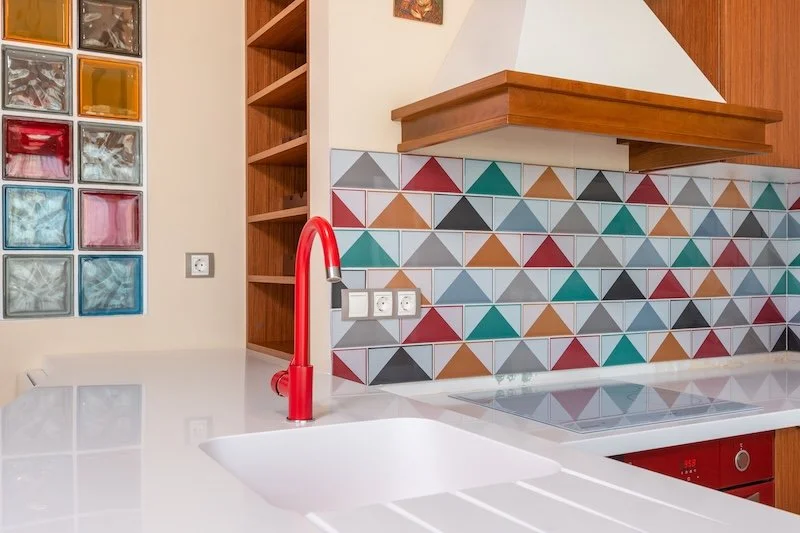
Color and geometric patterns incorporated into this kitchen design.
Before picking paint colors or falling in love with a particular tile, take a good look at the house itself.
Which original features are worth preserving? Is there beautiful woodwork hiding beneath layers of paint? Does the fireplace anchor the living room? Are the windows, roofline, or built-in cabinets part of what makes the house distinctive?
Then consider what isn't working so well.
Older homes may need electrical, plumbing, insulation, window, or HVAC upgrades. In Oklahoma City, where summers can be brutally hot and severe weather is a fact of life, comfort, energy efficiency, and durability deserve a place in the conversation. A gorgeous renovation is less enjoyable when the house feels like an oven in July.
Structural considerations matter, too. Removing a wall or expanding a window opening may be possible, but it's worth understanding what's involved before making plans around it.
A little investigation at the beginning can save a lot of frustration later.
The Kitchen: Modern Function, Mid-Century Soul
Kitchens are often high on the remodeling list, and for good reason. The kitchen that worked for a family in 1962 may not be particularly accommodating to a household juggling modern appliances, busy schedules, and a desire for more than three square feet of counter space.
Fortunately, updating a kitchen doesn't mean abandoning its mid-century roots.
Flat-front cabinetry, warm wood tones, simple hardware, and natural stone can all complement the architecture. For a more colorful approach, consider a saturated cabinet color, patterned backsplash, or distinctive flooring that introduces geometric interest without overwhelming the room.
Mid-century design can handle a little drama. In fact, it often benefits from it.
The trick is choosing where to make a statement. A bold backsplash might be the star of the kitchen, while the cabinetry and countertops play supporting roles. Or perhaps the cabinetry provides the color, and the remaining finishes keep things grounded.
Layout deserves just as much attention as appearance. Better storage, more useful work surfaces, and a stronger connection between the kitchen and adjoining living spaces can transform how a home functions. Removing a wall may be the right answer, but open concept isn't a requirement for a successful remodel. Sometimes the original layout has more going for it than you think.
Bathrooms and Living Spaces: Knowing When to Edit
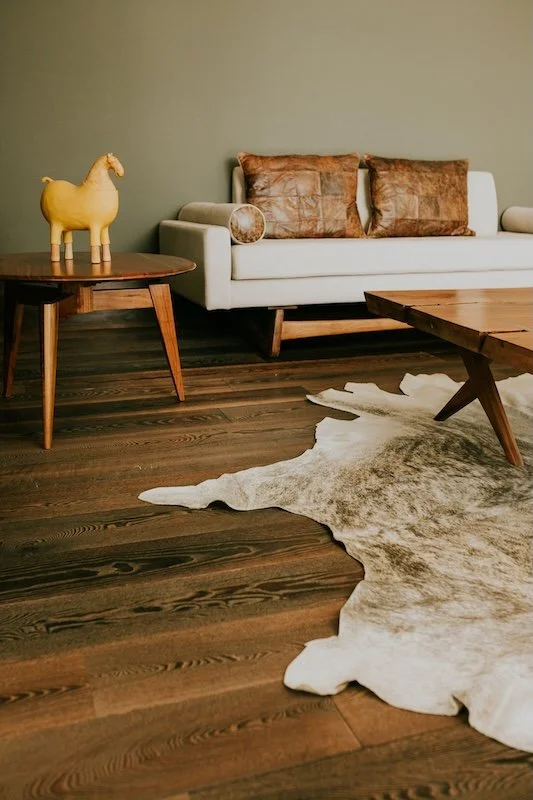
Bathrooms, living rooms, and hallways can all benefit from a fresh look, but this is where a little restraint can go a long way.
A dated bathroom might need new fixtures, better lighting, improved ventilation, and a more functional layout. Geometric tile, warm wood, or a carefully chosen accent color can bring in mid-century character without requiring a full historical reenactment.
In living spaces, consider preserving original fireplaces, built-ins, exposed beams, or distinctive windows. These features often provide the visual interest that new construction tries to manufacture.
And before removing every wall in sight, consider how the existing rooms work together. Open spaces can be wonderful, but so can a little separation, a well-placed doorway, or a room that feels like it has a purpose beyond being a passageway to somewhere else.
Good design isn't about making everything bigger or more open. It's about making the space work better.
Color, Pattern, and Materials: Don't Be Afraid of a Little Personality
If there's one place where a mid-century modern remodel can have some fun, it's the selection of colors, patterns, and finishes.
The era's signature palette ranges from earthy olive greens and warm browns to mustard yellow, rust, and burnt orange. Teal, turquoise, and other brighter colors can provide contrast, while black-and-white patterns create a graphic punch.
Geometric tile, abstract wallpaper, patterned textiles, and sculptural light fixtures are all ways to bring in that unmistakable mid-century spirit. You don't need to use all of them in one room. Unless your goal is to make your guests wonder whether they've accidentally walked into a very stylish geometry lesson.
Instead, choose a few elements that complement the home's architecture. Pair a bold pattern with simpler surfaces. Let natural wood balance a saturated color. Use contrast intentionally rather than adding visual interest everywhere at once.
And remember that mid-century modern is more than a collection of retro accessories. You don't need a starburst clock on every wall or an avocado-green appliance to prove you've committed to the aesthetic. The architecture, proportions, materials, and overall composition do most of the work.
Common Remodeling Mistakes to Avoid
One mistake is removing original features before considering their value. Built-ins, fireplaces, and distinctive woodwork can be difficult to replace, and their imperfections may be part of their charm.
Another is treating every room as a separate design project. A beautiful tile, an interesting paint color, and a striking countertop can all be good choices individually and still fail to work together.
It's also easy to focus on the visible updates while ignoring the less glamorous ones. Plumbing, insulation, ventilation, electrical systems, and structural repairs may not make for exciting before-and-after photos, but they matter.
Finally, don't confuse preserving character with refusing to change anything. A home can respect its architectural history and still have modern storage, efficient appliances, comfortable bathrooms, and spaces designed around the way people actually live.
A Mid-Century Home for the Way You Live Now
Remodeling a mid-century modern home in Oklahoma City is an opportunity to keep the qualities that made the house special while addressing the things that no longer work.
That might mean restoring original woodwork, introducing a bold geometric tile, rethinking the kitchen, or improving the home's energy efficiency. Every house will call for a different combination of decisions.
The goal isn't to make the home look as though it has never changed. It's to make the changes feel like they belong.
With a little architectural appreciation, some thoughtful planning, and perhaps the courage to embrace a really good shade of burnt orange, you can create a home that honors its past without being stuck in it.
If you'd like to start a conversation about renovating or remodeling your home, reach out through our website or stop by our design + build studio in central Oklahoma City. REACH OUT TODAY→
